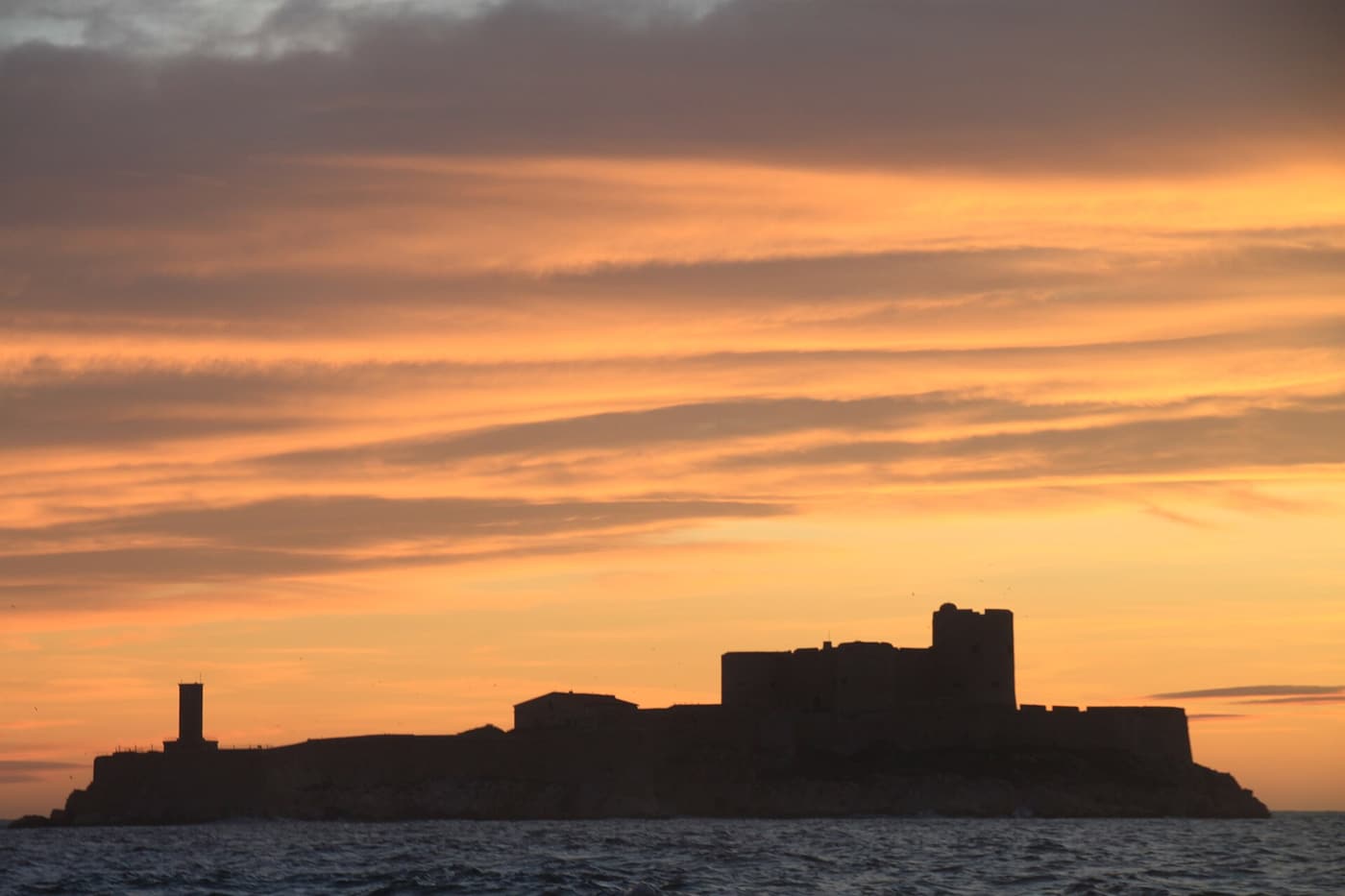
The Château d'If is small — you can walk round the whole island in a few minutes — but it packs in five hundred years of history, one of the great stories of world literature and a view over the Bay of Marseille that alone is worth the crossing.
A short history
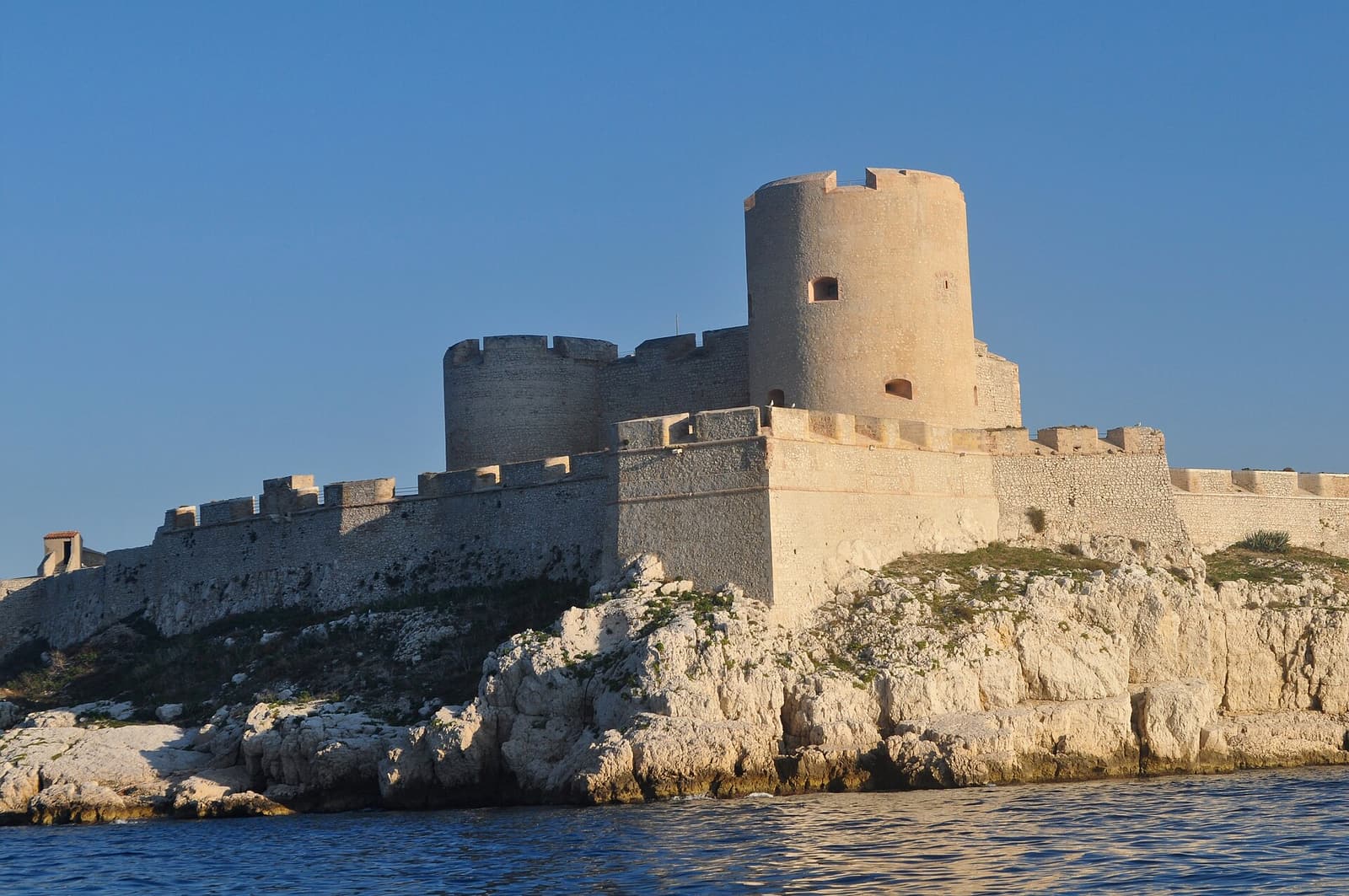
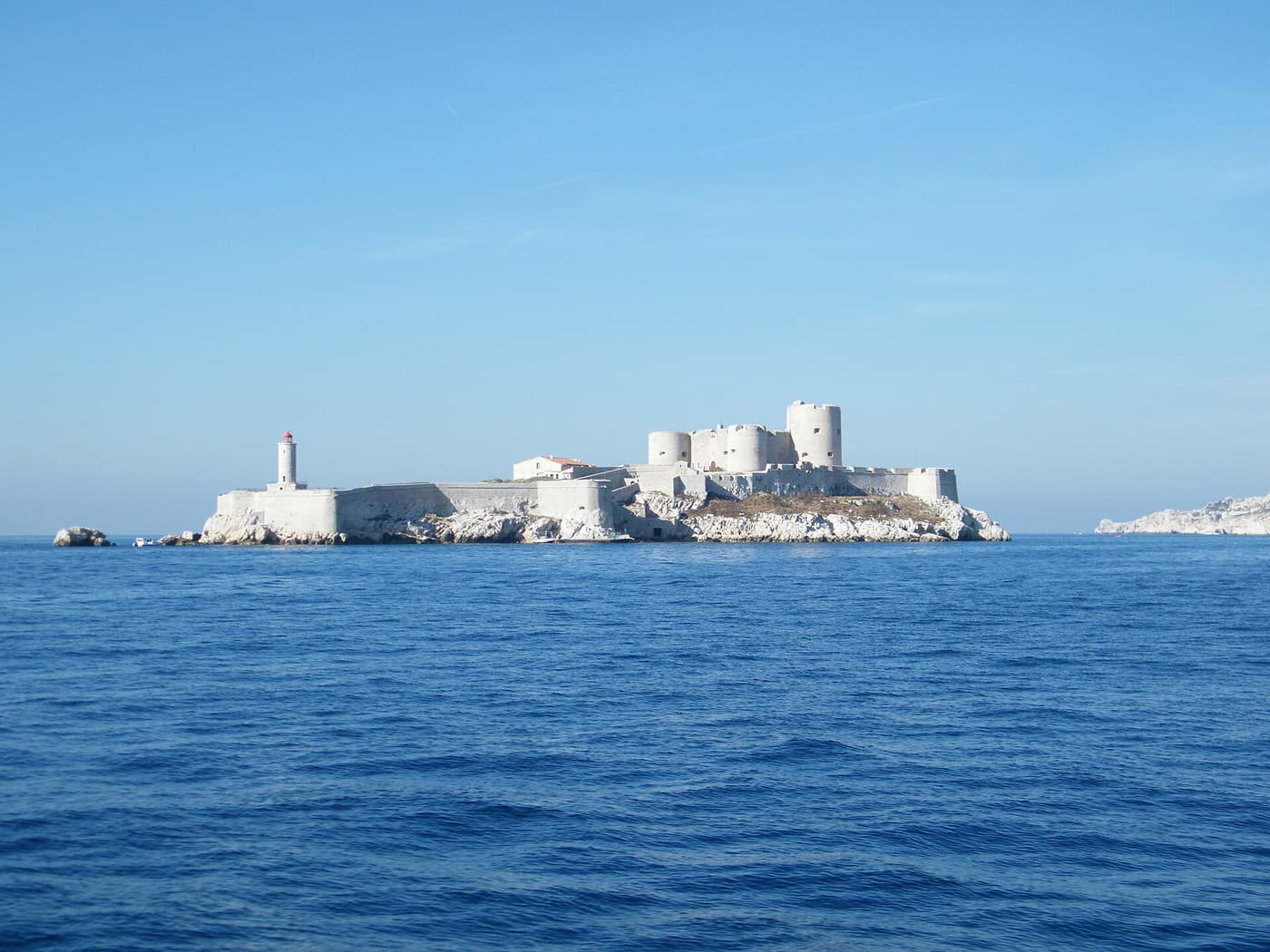
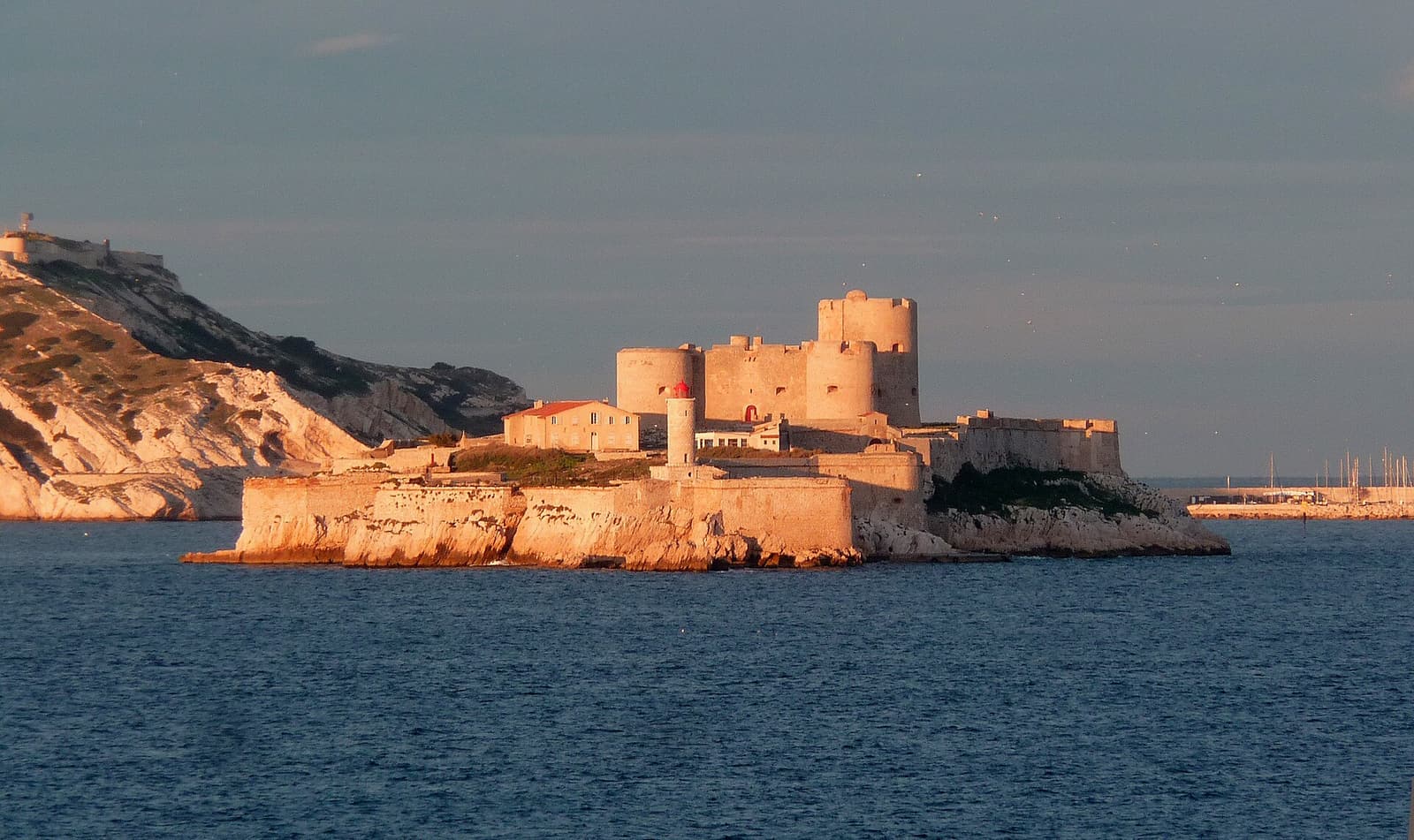
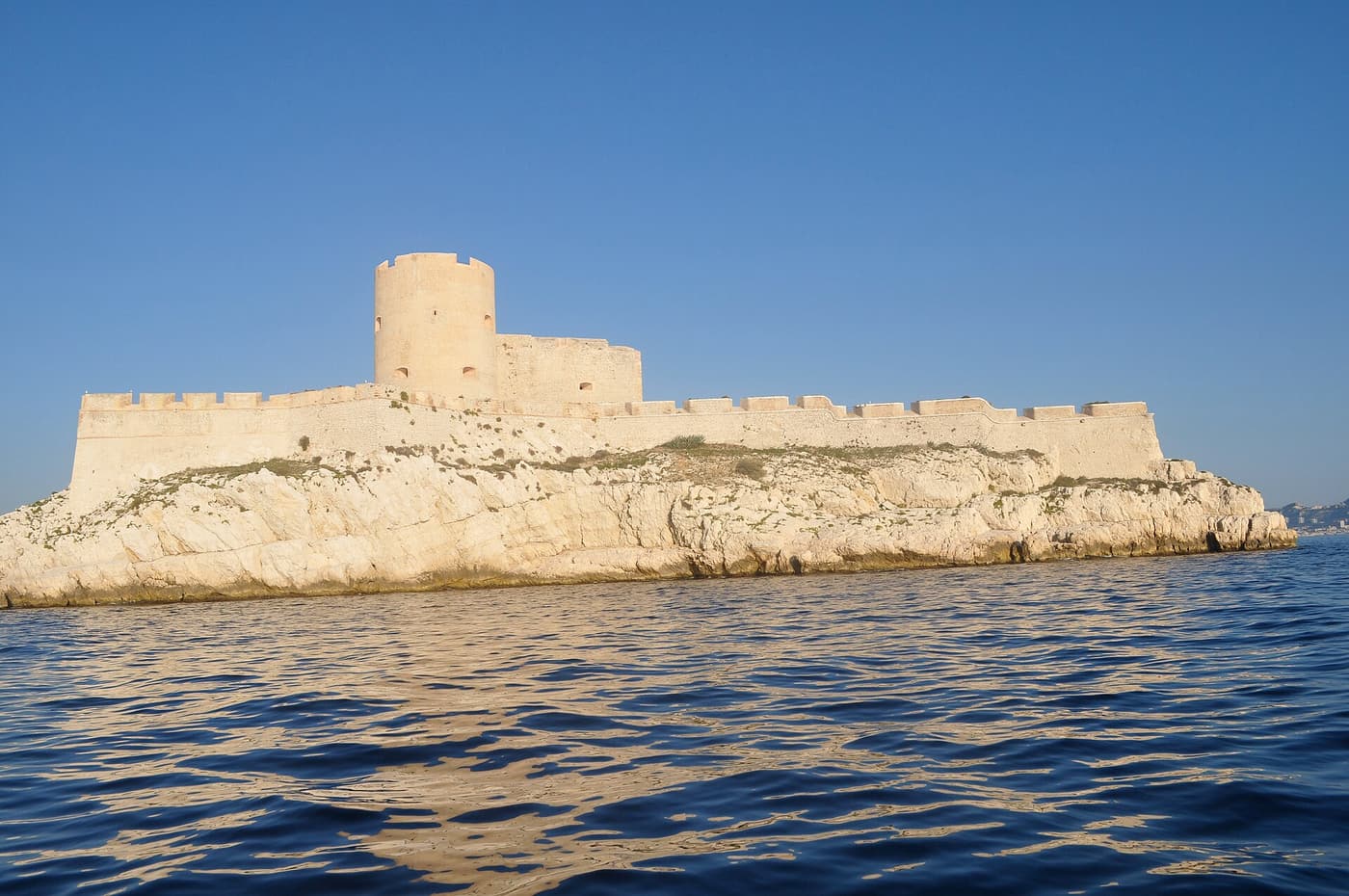
In January 1516 the young King Francis I stopped at the island of If to see an extraordinary visitor: an Indian rhinoceros, a gift from the King of Portugal on its way to the Pope, landed there during its voyage. The king noticed what his engineers already knew — that the rock commanded the approaches to Marseille — and ordered a fortress. It was built between 1527 and 1529: a square keep three storeys high with three round towers, the tallest being the Saint-Christophe tower. At the end of the century, ramparts were added around the edge of the island.
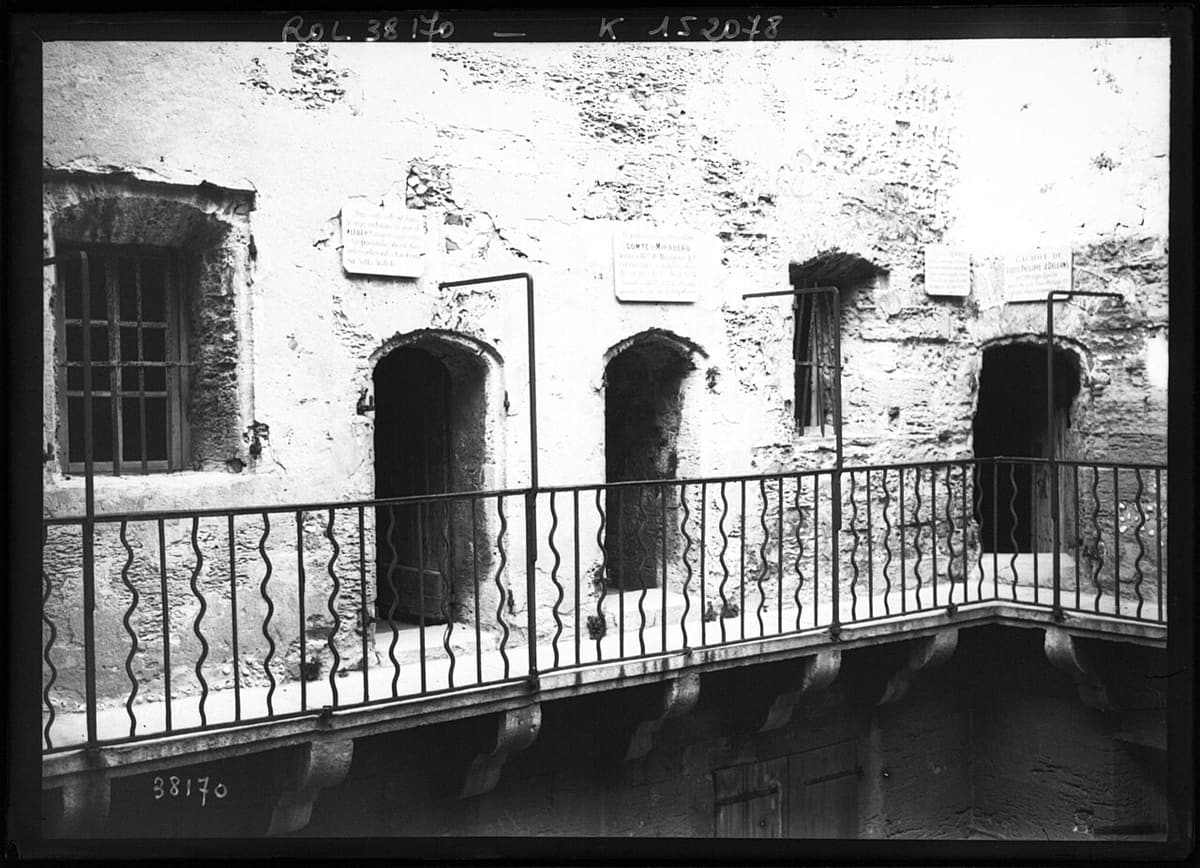
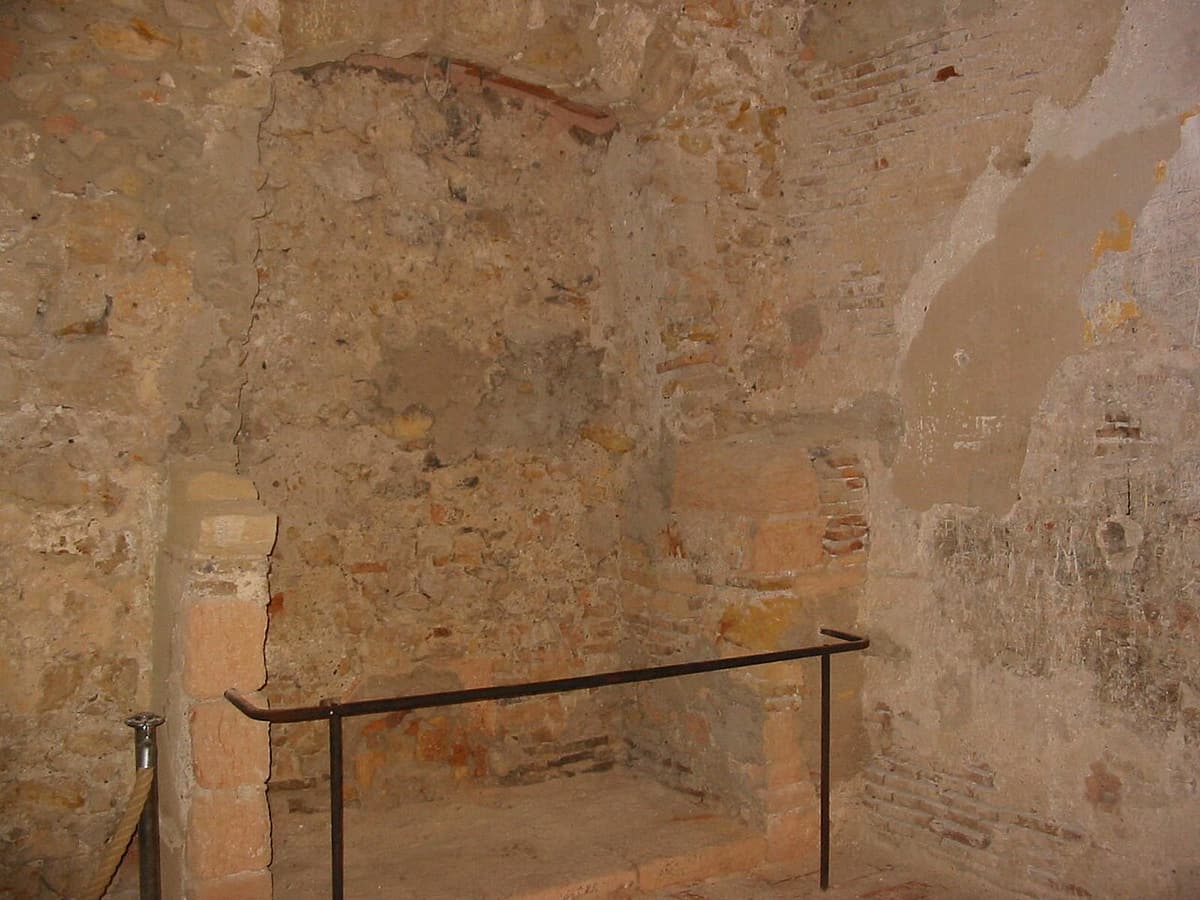
The fortress was never attacked. Its value lay elsewhere: an island a short sail from the city, with walls several metres thick and nothing but sea around it, made an ideal prison. From the late 16th century it held political and religious prisoners — many of them Protestants, especially after the revocation of the Edict of Nantes in 1685 — as well as nobles locked up under royal orders, often at the request of their own families. The young Mirabeau, later a leader of the Revolution, was one of these, in 1774. Prisoners who could pay lived in the upper cells with windows and fireplaces; the rest were held in dark cells on the ground floor.
In 1844, Alexandre Dumas began publishing The Count of Monte Cristo, whose hero, Edmond Dantès, is falsely denounced and thrown into the Château d'If. Visitors started to arrive in search of his cell almost at once. The prison later held insurgents of 1848 and of the 1871 Commune before it was decommissioned; the fortress was opened to visitors in 1890 and listed as a historic monument in 1926. It is now managed by the Centre des monuments nationaux. Read more in The Count of Monte Cristo and the Château d'If.
What to see
- The landing and the ramparts. From the jetty you climb past the outer walls to the gate of the fortress.
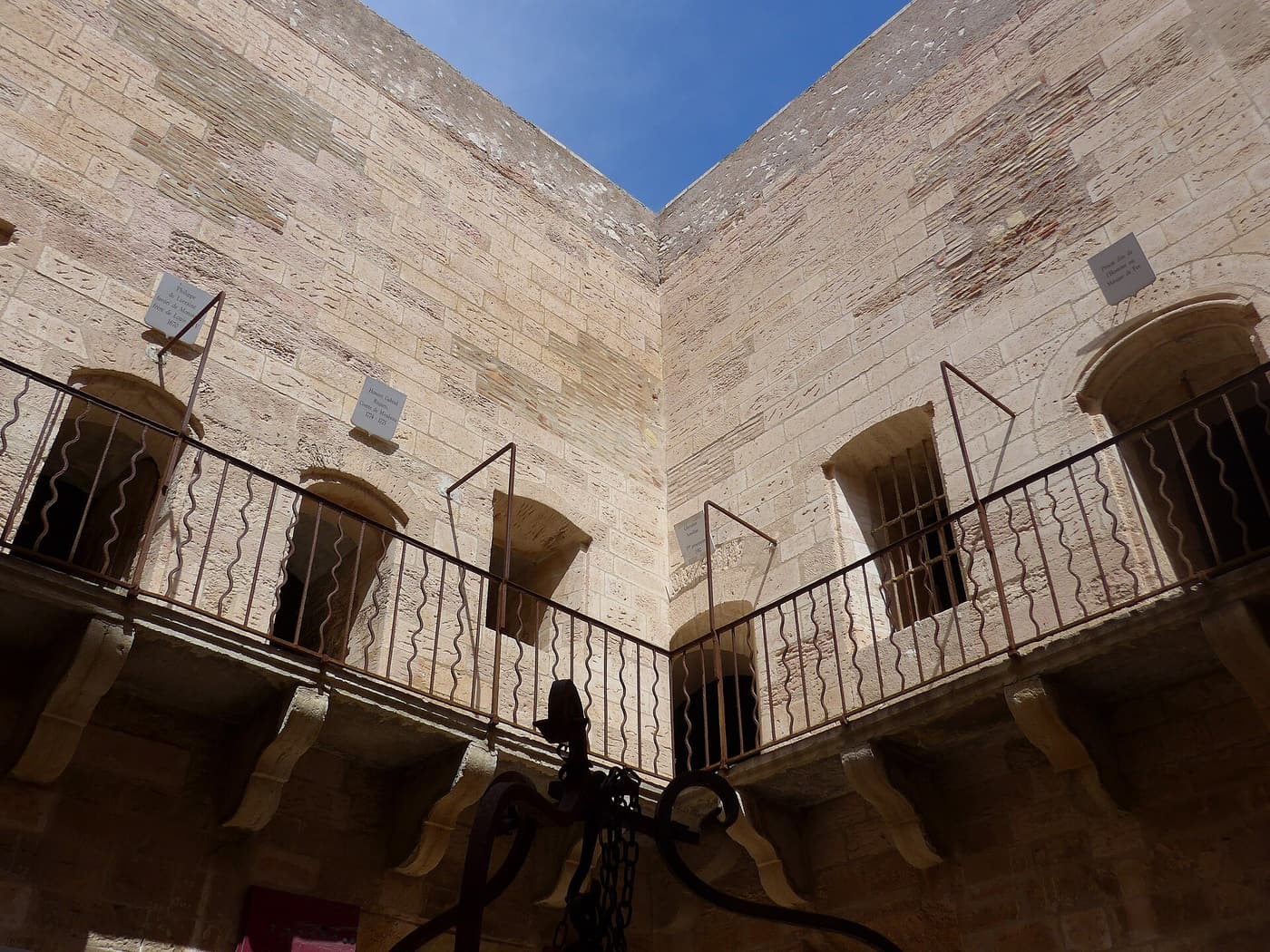
- The courtyard. A tall, narrow space with a stone well, overlooked by the galleries of the upper cells.
- The ground-floor cells. Including the cells named for Dantès and the Abbé Faria, with the hole through which, in the novel, the old priest tunnels to his neighbour. Others carry the names of real prisoners.
- The upper cells. The pistoles for paying prisoners, with fireplaces and windows over the sea — and the inscriptions carved by inmates.
- The terrace and the Saint-Christophe tower. The finest view: the Frioul islands close by, the city around the Vieux-Port and Notre-Dame de la Garde on its hill.
| Practical point | What to expect |
|---|---|
| Getting there | Boat from the Vieux-Port, about 20 minutes |
| Entry | Separate from the boat: around €7 for adults in recent years; free for under-18s and EU residents aged 18–25 |
| Opening | Most of the year; longer hours in summer, a weekly closing day off-season, closed on some public holidays |
| Time needed | About 1–1.5 hours on the island; half a day with the crossing |
| Weather | No landings in strong Mistral or heavy swell |
| Facilities | Limited: small shop, toilets; little shade |
| Accessibility | Difficult: uneven ground and many stairs |
 Château d'If & the Frioul islands
Château d'If
The island fortress of the Count of Monte Cristo
A square fortress with three round towers on a bare white rock in the Bay of Marseille. Built in the 1520s on the orders of King Francis I to guard the approaches to the port, it never had to fight and became instead a state prison — and then, through Alexandre Dumas, the most famous prison in literature. Today it is a national monument run by the Centre des monuments nationaux, reached by boat from the Vieux-Port.
 Château d'If & the Frioul islands
Île Ratonneau
The Frioul island with the village, the beaches and the hospital
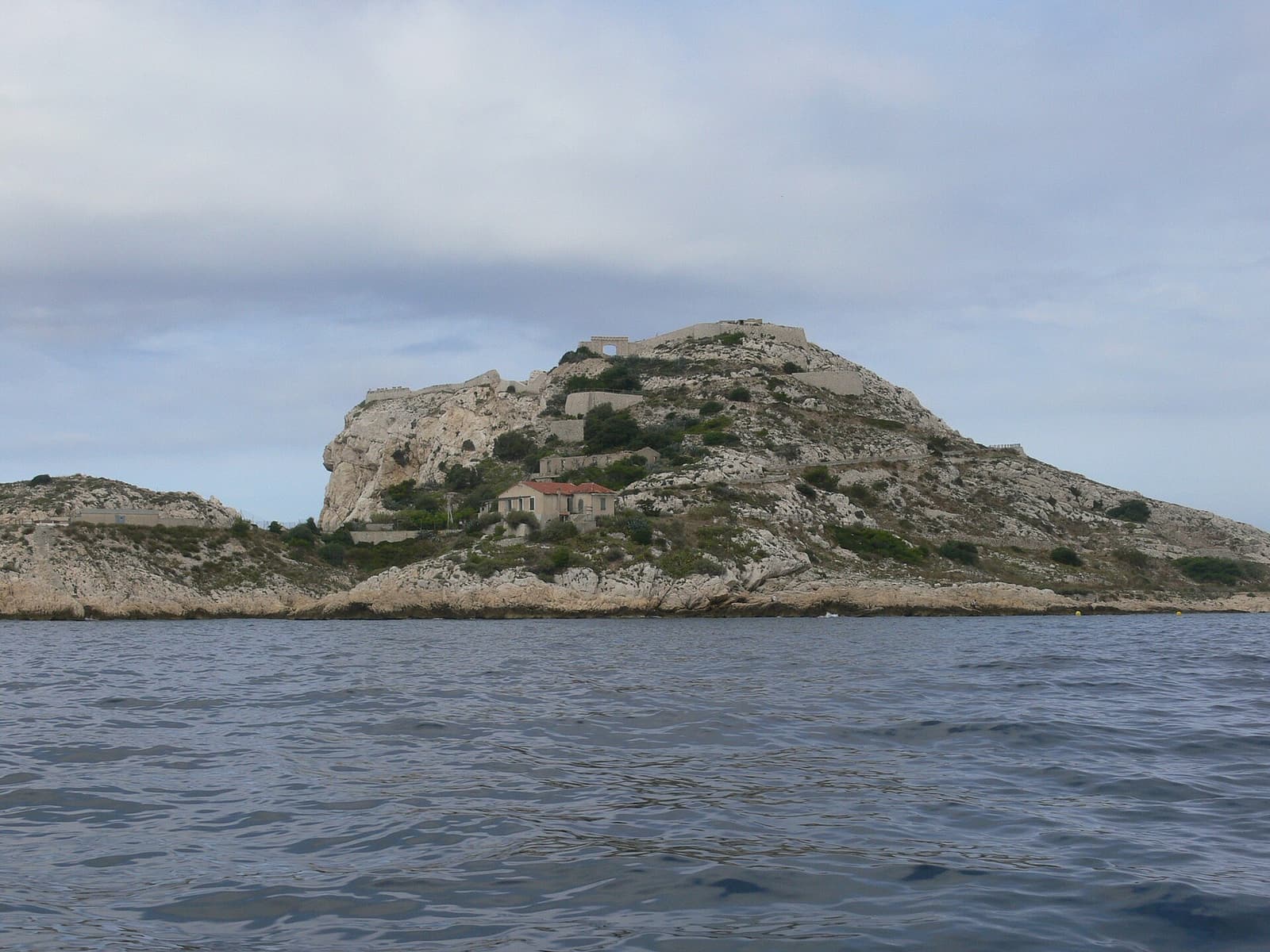
The northern of the two large Frioul islands, joined to Pomègues by a long sea wall. The boats land at Port du Frioul, a small marina village with cafés and a few shops; from there paths of white limestone lead to the coves and beaches, the old quarantine hospital, the Hôpital Caroline, and the forts on the heights. Bare, sunny and wonderfully quiet a few minutes from a city of 870,000 people.
 Château d'If & the Frioul islands
Hôpital Caroline
A neoclassical quarantine hospital on a windswept ridge
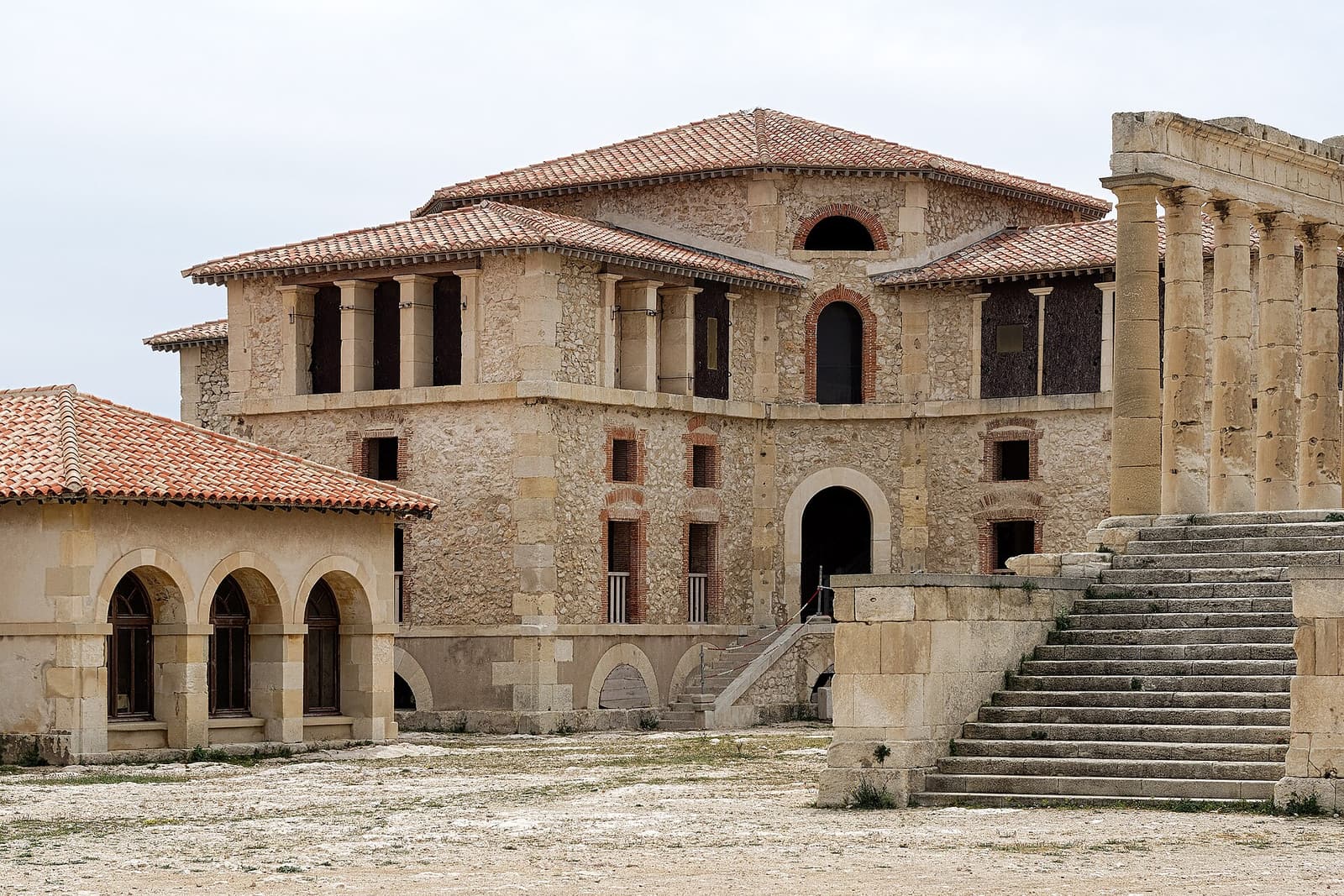
On a ridge of Ratonneau, overlooking the sea and Marseille, stands a striking stone building of columns and courtyards: the Hôpital Caroline, built in the 1820s as a quarantine hospital for sailors and passengers suspected of carrying yellow fever and other epidemics. Long abandoned, it has been partly restored and is now one of the most photographed places on the islands — with one of the best views of the Château d’If.
 Château d'If & the Frioul islands
Frioul Beaches & Coves
Swimming in clear water, half an hour from the Old Port
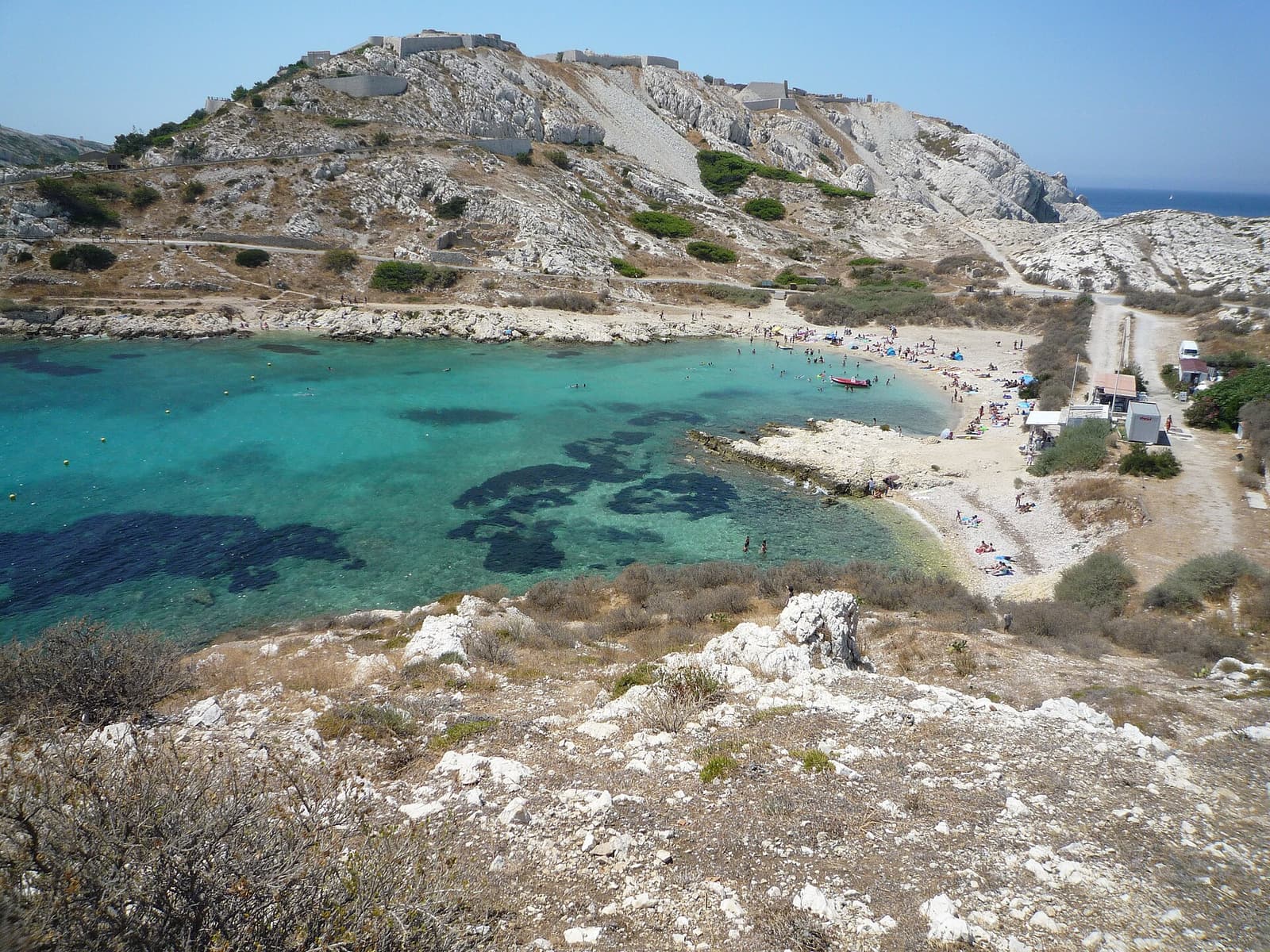
The Frioul islands have some of the clearest water anywhere near Marseille: small pebble and sand beaches and rocky calanques on both Ratonneau and Pomègues, many of them a short walk from the harbour. Saint-Estève on Ratonneau is the easiest family beach; Morgiret and the smaller coves beyond are quieter. There is no shade to speak of, and on a summer weekend the nearest beaches fill up early.
 Boat transfer with entry ticket from €58
Marseille: Skip-the-Line Boat Trip to Île d'If with Castle Entry
The straightforward way to actually go inside the Château d'If with everything arranged: you meet the operator's staff in Marseille, cross by boat to the island and visit the fortress — cells, courtyard and ramparts — on your own before returning. As with every crossing to If, departures depend on sea and wind.
- Return boat to the island
- Entry to the Château d'If included
- Explore the fortress at your own pace
 Entry ticket from €13
Château d'If Castle Entry Ticket
Entry to the fortress itself. You climb to the terraces for the view back to Marseille and walk through the cells that the story of Edmond Dantès and the Abbé Faria made famous. The boat to the island is not included — arrange the crossing from the Vieux-Port separately.
- Visit at your own pace
- Ramparts with views over the bay
- Cells linked to The Count of Monte Cristo
Small-group guided tour from €139 Marseille: The Count of Monte-Cristo Tour — Walking + Boat + Château d'If (max 10 people)
A literary tour for readers of Dumas: a guided walk through the Marseille where The Count of Monte Cristo begins, followed by the boat out to the Château d'If and a visit of the fortress. It is a newer product with only a handful of reviews so far, but it is the one option on the market built entirely around the novel.
- A walk through the Marseille of the novel
- Boat crossing to the Château d'If
- Group of no more than 10
 Small-group boat trip from €59
Marseille: Boat to Le Frioul, Château d'If, and Swim
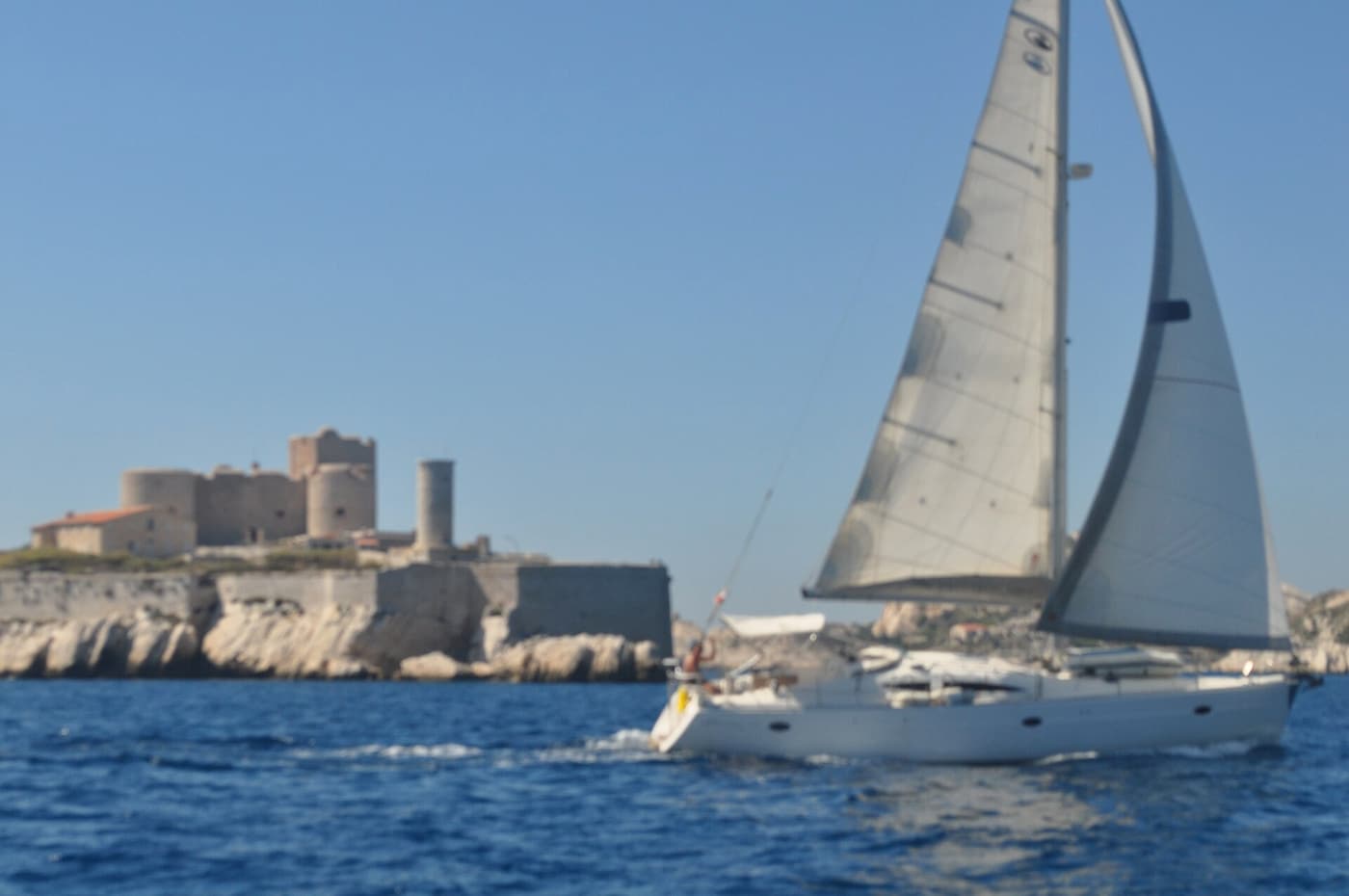
The most-reviewed boat trip on this page. You leave from near the MuCEM and sail round the Château d'If and along the wild coves of the Frioul islands, with the story of the Count of Monte Cristo on the way, then stop to swim and snorkel. It circles the fortress rather than landing there — book an entry ticket separately if you want to go inside.
- Close-up views of the Château d'If from the water
- Swim stop in a turquoise Frioul cove
- Masks and snorkels provided; group limited to 11
 Small-group evening cruise from €69
Marseille: Sunset Boat Cruise with Rosé Wine & Snacks
A shorter golden-hour outing in a small group: swim in a cove, sip a glass of rosé with snacks and watch the sun go down behind the Château d'If.
- Sunset over the Château d'If
- Swim in a turquoise cove
- A glass of rosé and snacks
 Sightseeing cruise from €62
Marseille All Year Round: Heritage Tour on a Covered Catamaran
A two-hour cultural cruise between the Old Port, the Frioul islands and the Château d'If on a covered electric catamaran — designed to run all year, so it is one of the few options in the cooler months. New on the market at the time of writing, with no reviews yet.
- Electric catamaran with a covered deck
- Old Port, Frioul and Château d'If from the sea
- Runs in winter as well as summer
Tips for a better visit
- Take the first boat. In July and August the mid-morning crossings are crowded and the unshaded island is hot by noon.
- Check the last boat back as soon as you land, and be at the jetty in good time.
- Bring water and a hat — there is little shade and only basic facilities.
- Read the novel's first chapters, or at least the prison chapters, before you go; the visit comes alive.
- Add Frioul. With a combined ticket you can continue to the Frioul islands for lunch and a swim. See the Frioul guide.
- Look at it from land too. The terraces of Notre-Dame de la Garde and the Corniche give classic views of the fortress, especially at sunset.
Visiting with children
Children usually love the island — the boat, the fortress, the dark cells and the story of a prisoner who escaped in a sack. Keep a close eye on them on the ramparts and the terraces, and bring snacks and water. Pushchairs are impractical; a carrier is better.
Food and drink
There is no restaurant to speak of on If. Eat before you go, bring a picnic for after your visit (respecting the site), or continue to Port du Frioul, which has cafés and restaurants in season. Back in town, the Vieux-Port and Vallon des Auffes are the places for fish.
Money, safety and practicalities
- Cards are widely accepted in Marseille; carry a little cash for small purchases.
- Marseille's central areas are busy and generally safe; watch for pickpockets on the metro and in crowds.
- In an emergency in France, call 112.
- Summer heat is intense; drink plenty and avoid the midday sun on the islands.